Since January 2023, Gulf Med Aviation Services (GMAS) has provided Helicopter Emergency Medical Services to the HSE National Ambulance Service in Ireland. Recently, the operation grew to two bases, with a new north-west base in Sligo joining Rathcoole. Adrian Kenny, Chief Pilot for Ireland Operations, reflects on the expansion, on how the service is performing, and on what it means to fly and manage at the same time.
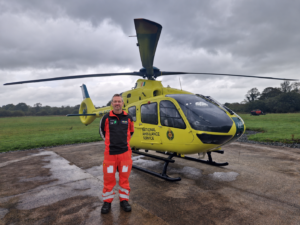
1. In September, GMAS began operating from a second HEMS base in Ireland, in Sligo. From a management perspective, what challenges did this expansion bring, and how did the team prepare?
The biggest challenge was people. Experienced HEMS pilots are highly sought after worldwide, so building a new crew is never just a matter of filling a roster. We needed a team that would work well together and hold HEMS values as their own. I believe we achieved that. The timeline was also ambitious, and we delivered on it thanks to a sustained effort from everyone involved.
Then there is the environment. In the west of Ireland, the Atlantic weather and the landscape shape every decision. The best mitigation is local knowledge, so the team brings together pilots who grew up with these conditions and colleagues from abroad who are building that experience alongside them.
Preparing also meant getting to know the region before going live. During our training flights, we landed at Blacksod Lighthouse, in County Mayo, a place with a remarkable history: in 1944, the weather report sent from there helped set the date of the D-Day landings. Moments like that remind you how closely this coast is tied to the people who know it best.
2. Nearly four years on, how is the operation in Ireland performing?
I would call it a success story. We fly primary HEMS missions only. Rathcoole alone accounts for around 500 a year, and with Sligo now operational, we expect that number to reach between 850 and 950.
Performance is built every day. Each shift starts with a briefing that brings the whole crew together, pilots and paramedics, supported by a rigorous on-site engineering team. Every mission is debriefed with one aim: to make the next one better.
For us, the extension of our contract was a vote of confidence. We do not take it for granted. We work to earn it on every shift: delivering on every commitment and, wherever we can, going further.
3. As Chief Pilot, your role goes beyond flying: you also oversee the running of the operation in Ireland. How does each side of the job inform the other?
Being a pilot first means I understand both sides of the same table. When I plan rosters, liaise with the client or work with our engineers and our maintenance team, I know what those decisions mean for the crew in the cockpit on a morning when the weather is closing in.
It works the other way too. Management has shown me everything it takes to put an aircraft in the air: rosters, serviceability, the relationship with the client. Much of that work is invisible, yet every mission depends on it. Knowing that makes me a better crew member.
In the end, both roles serve the same purpose. Helping people is part of GMAS’s DNA, and doing it in your own country, often in your own community, is a privilege. What we have built in Ireland reflects what GMAS brings wherever it operates: a team you can trust and a standard that does not change with the location.